
It’s that time of year… Pumpkin Season! The air is a little cooler and the leaves have turned. We’ve begun the annual swapping of tee shirts for hoodies, of bare feet for cozy socks. Long, sunny days and dinners outside have made the gradual shift to earlier sunsets and warming dinners tucked-in around the kitchen table.
And then there are the pumpkins. Just like that- they’re everywhere- a familiar sign that summer has officially run its course.
You Can Always Jump Straight To The Recipe!
If you just want to go straight to the recipe there’s a button for that at the very top of this page and you’re more than welcome to use it ↑ 🙂
But, if you want to learn more about why pumpkins are super good for you, how to pick the best pumpkins for eating, the differences between canned and homemade pumpkin puree, and more? Keep reading!
How To Pick A Pumpkin
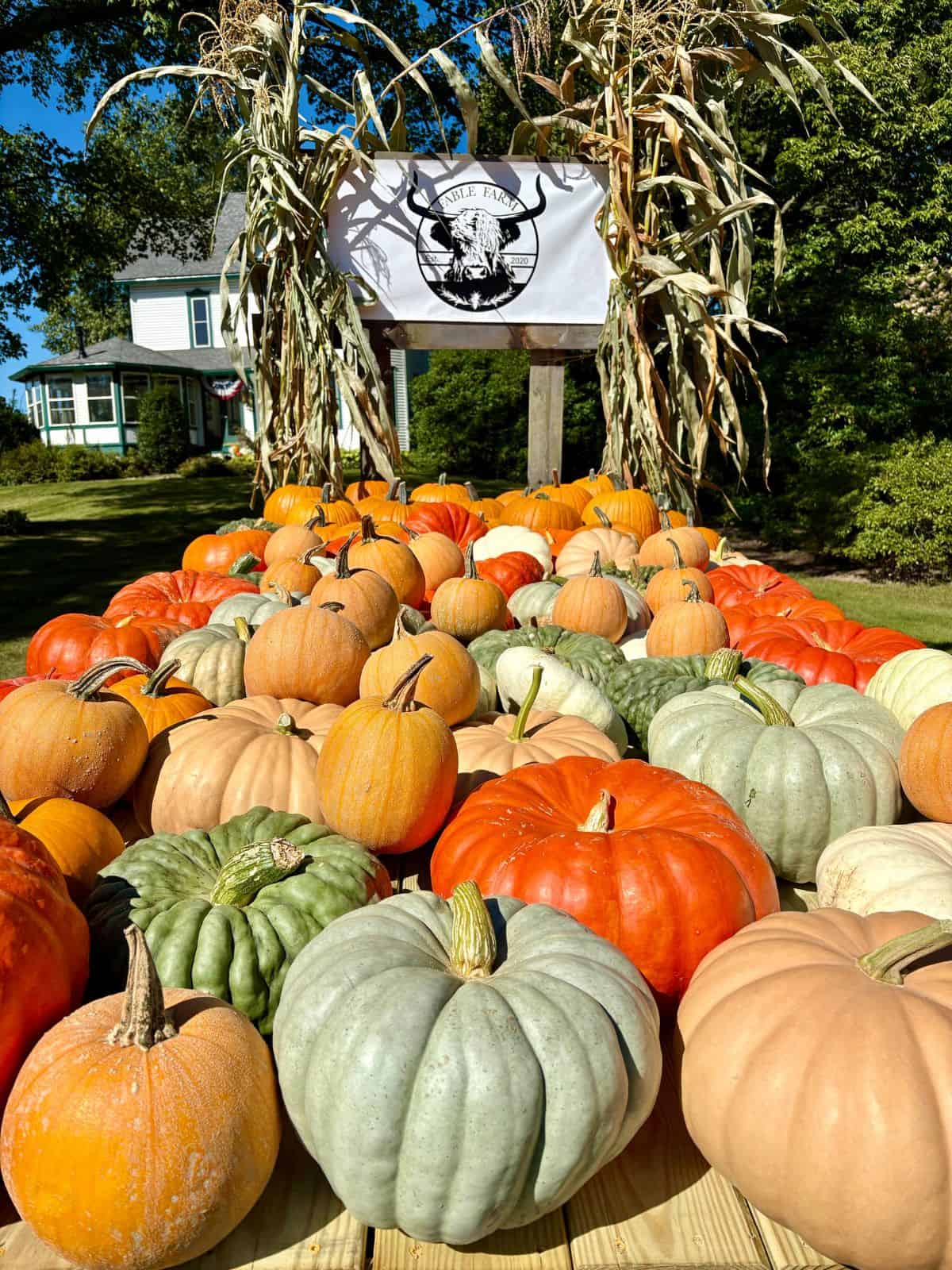
At Fable Farm, my daughter starts harvesting pumpkins in September. The grandkids have been patiently watching them grow all summer…and they each have their favorites. Those are the pumpkins they’ll get to claim as “theirs” when it’s time to pick!
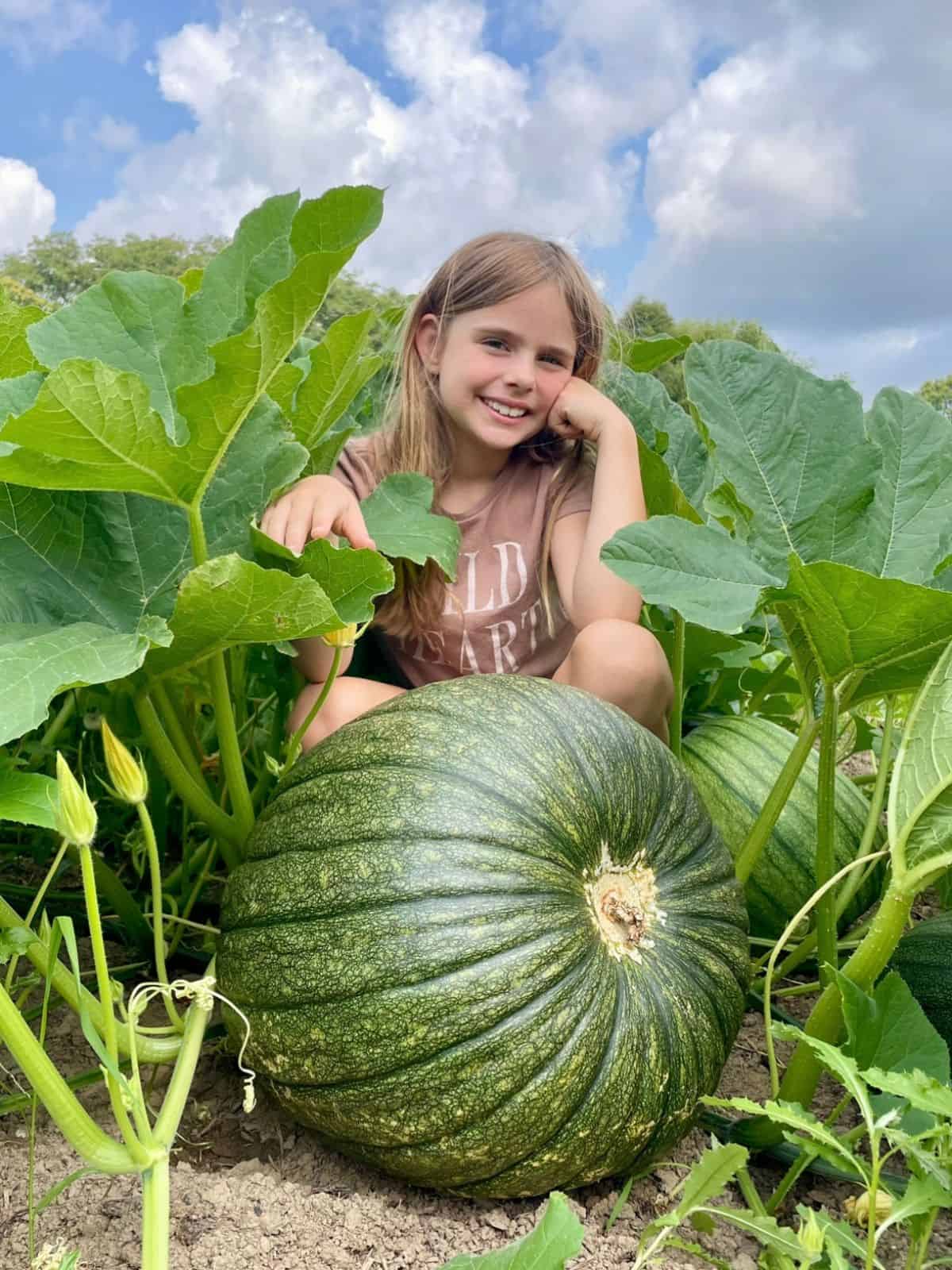
Hannah loves the heirloom varieties- they come in all different shapes, sizes AND flavor profiles. Not all pumpkin varieties are good for eating (at least not for humans- the sheep and chickens may beg to differ!), so it’s important to know what you’re buying if you plan to make puree.
If you’re buying from the grocery store look for small (3-4 pound) pumpkins labeled “pie” or “sugar” pumpkin. Choose only pumpkins with stems attached- this is a sign of health as well as protection against air getting in and moisture getting out. They should be hard and heavy for their size and they should last 1 to 3 months.
If you’re lucky enough to have a local source of heirloom pumpkins, these are a few of my favorites:
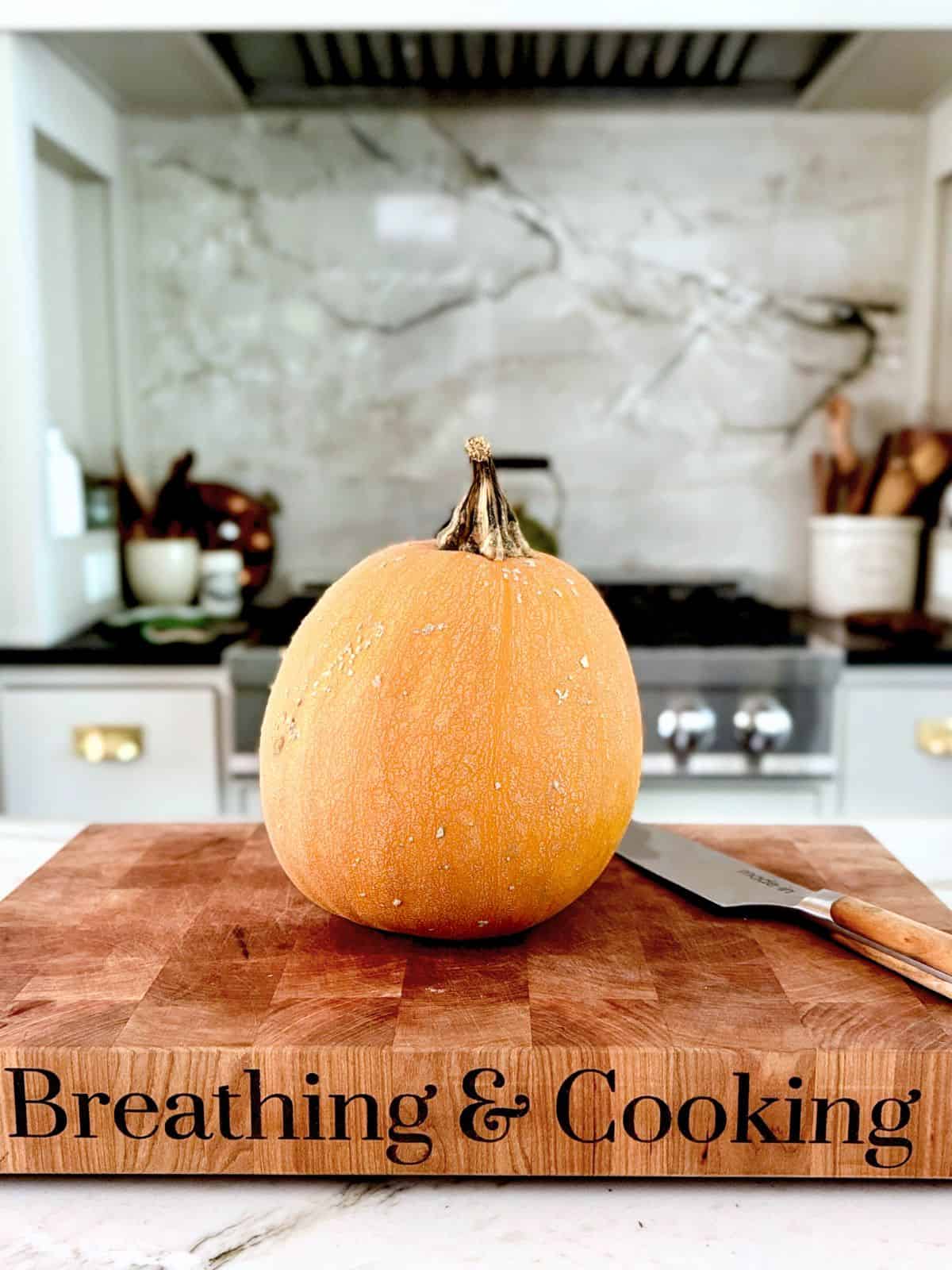
- Luxury Pie (pictured above)- This is such a cool pumpkin- and if you’re lucky enough to find one snatch it up! The outside has a netted texture and when baked the skin literally lifts off in one piece. They have a well deserved reputation as the absolute BEST tasting pumpkin, wonderfully sweet and silky when pureed. They’re a nice manageable size, topping out between 4 and 6 pounds.
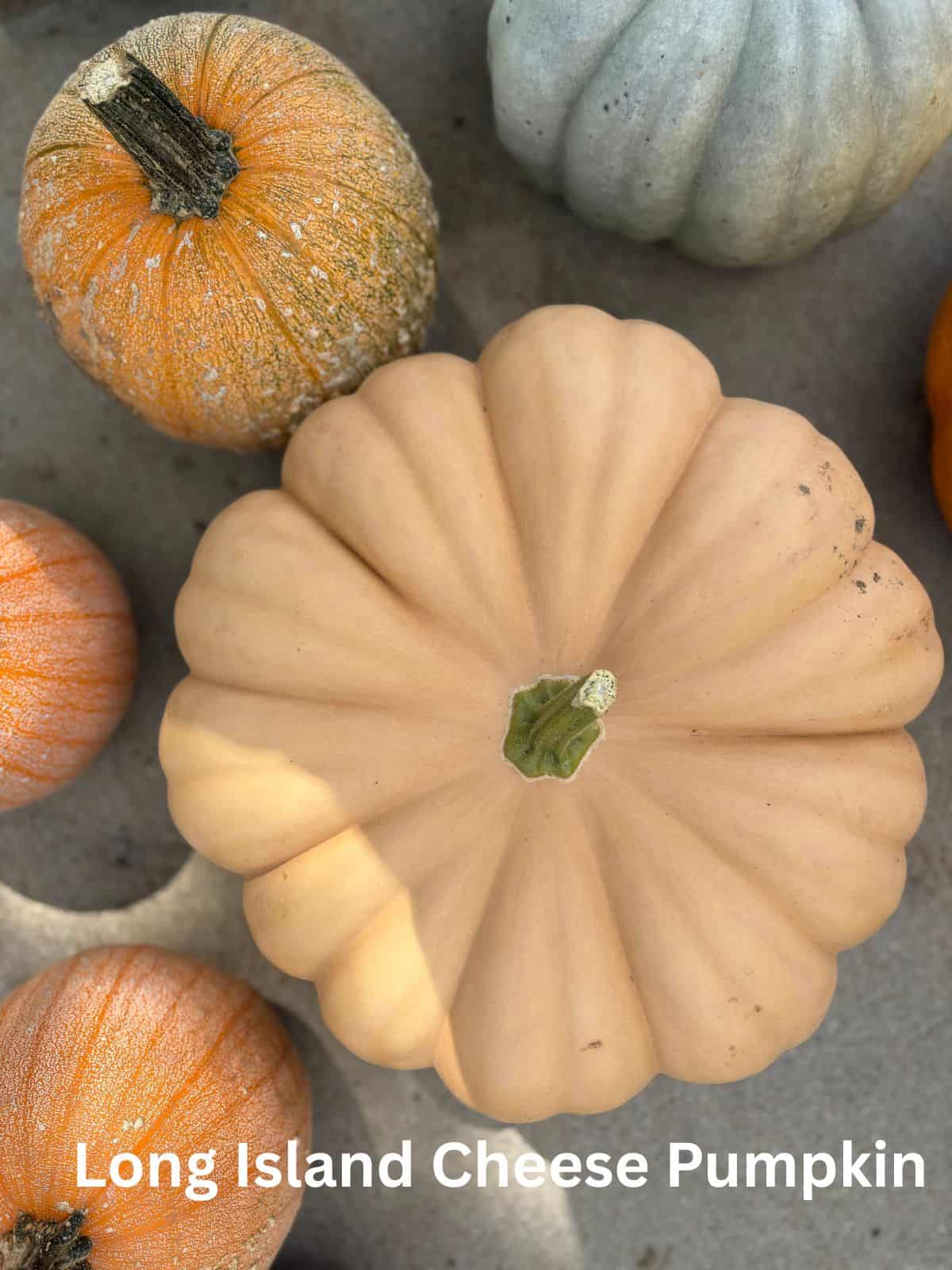
- Long Island Cheese- This is one of the oldest American heirloom varieties. Its name comes from how it resembles a wheel of cheese- with its buttery-buff outer color and flattened round shape. At 6-10 lbs when mature they’ll keep for 3 to 6 months. Their claim to fame is that they are completely stringless, which means an exceptionally smooth puree.
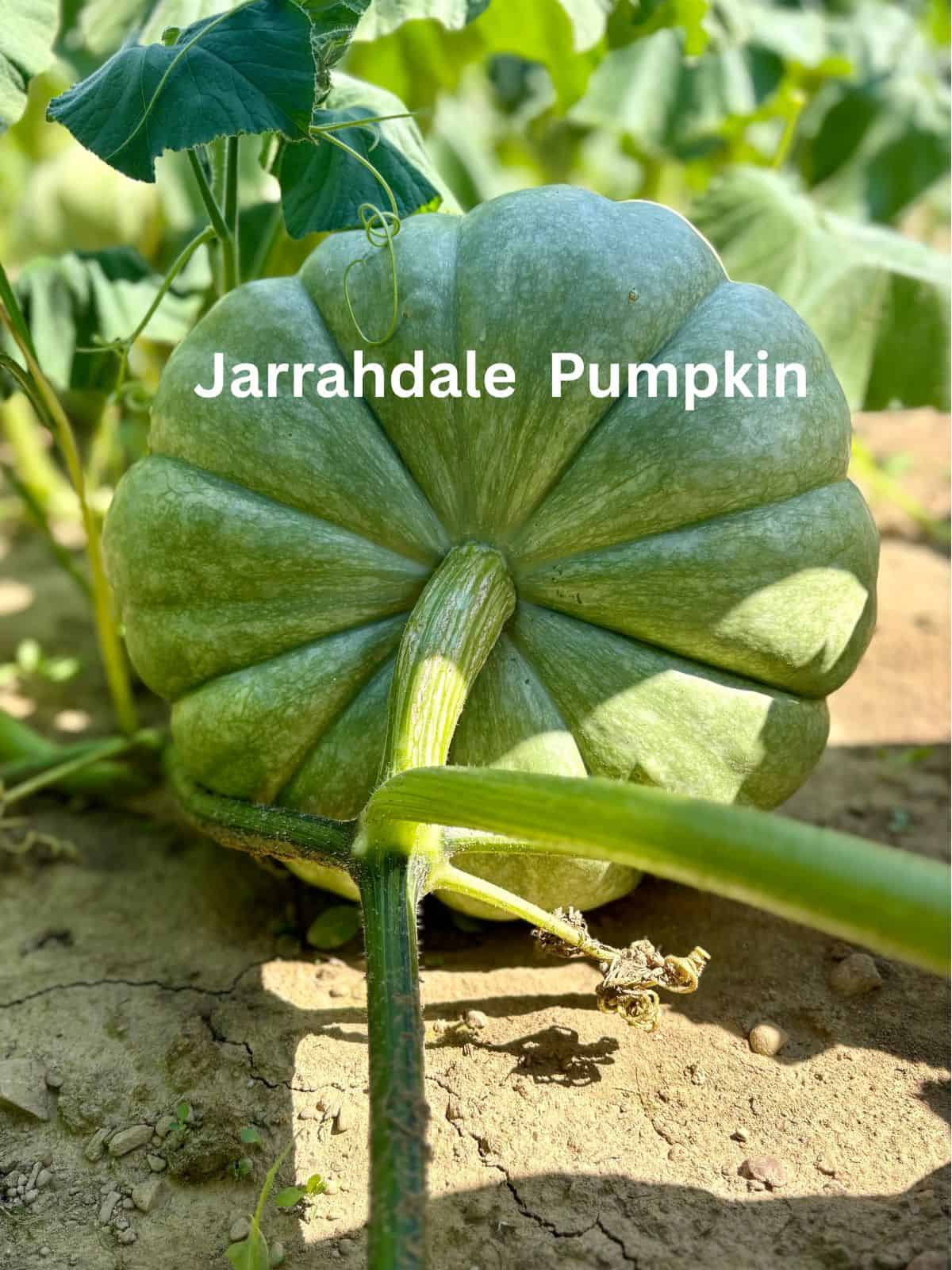
- Jarrahdale- This Australian variety is a blue-green to grey shade, with a flattened top and bright orange flesh. They weigh 6-10 lbs when mature and store exceptionally well with some claiming as long as 12 months (although I’m a little less optimistic lol)!
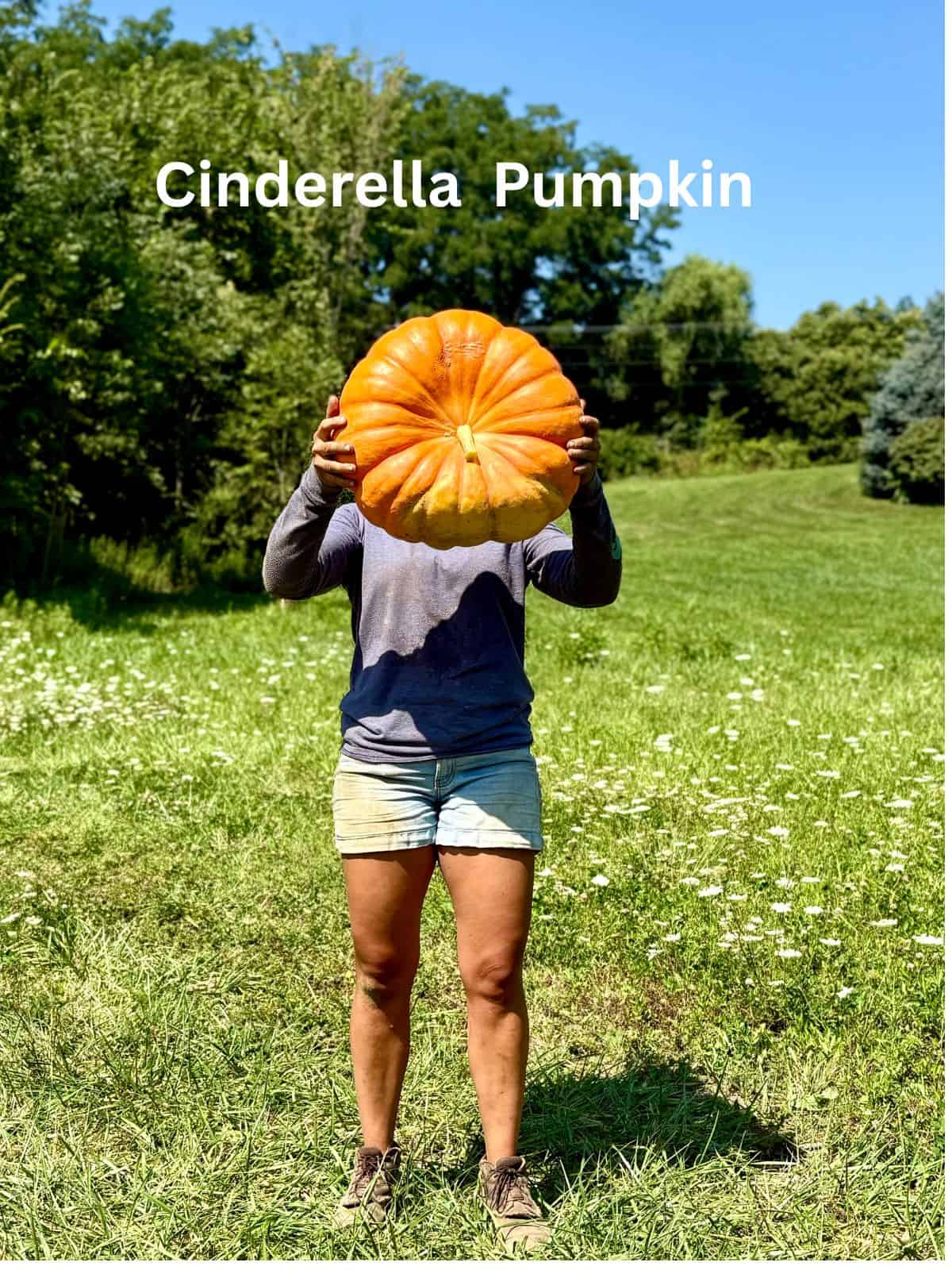
- Cinderella- When my kids were little this was the first pumpkin I grew, so I’m a little sentimental about it. They’re wonderfully squat and deep, red-orange just like the pumpkins in the fairy tale that bears their name. They’re BIG, weighing between 15 and 25 pounds, and their flavor is more savory than sweet (but they can be used in both applications). They do have a higher liquid content, so using them in a structured pie might be tricky. They’ll last 3 to 5 months.
Storage estimates are based on keeping in a cool, dry, dark place like a basement or a pantry. If kept on the counter they won’t last as long, and if left outside when it gets very cold they’ll decay pretty fast.
Why Pumpkins Are Nutritional Superheroes!
Whether roasted and tossed into salads, folded into baked goods, puréed into soups or swirled into smoothies- pumpkin is a seasonal ingredient that brings more than cozy flavor. It delivers genuine nourishment with every bite. Incorporating pumpkin into your meals is good for your heart, your skin, your eyes and your immune system. Let’s take a deeper look into what makes these beautiful orange symbols of Fall nutritional superheroes:
- A BIG Dose of Vitamin A: One cup of cooked and well-drained pumpkin can pack double your daily requirement of vitamin A, thanks to its high beta-carotene content. Beta-carotene is a powerful antioxidant that your body converts into vitamin A, which supports clear vision, glowing skin, and a strong immune system.
- Antioxidants: Beyond beta-carotene, pumpkin is rich in other carotenoids like alpha-carotene, lutein and zeaxanthin. These plant compounds help neutralize free radicals, support long-term eye health and offer broad protective benefits throughout your body.
- Heart-Healthy Potassium: Pumpkin is a great source of potassium. Potassium plays a major role in regulating blood pressure, keeping your heartbeat steady and supporting fluid balance. All essential for a healthy cardiovascular system.
- A Gentle Fiber Boost: Pumpkin’s fiber content supports healthy digestion, stabilizes blood sugar and helps you feel satisfied after meals.
- More Vitamins and Minerals: Vitamin C, vitamin E, magnesium, iron and multiple B vitamins all contribute to skin resilience, energy production, oxygen transport and overall vitality. Each one plays a meaningful role in keeping your systems running smoothly.
Fun fact: Cooking pumpkin actually makes some of its nutrients- especially beta-carotene- easier for your body to absorb! And when pumpkin is cooked down into a thick puree, removing more water concentrates the nutrients even further. This is a situation where processed can actually be MORE nutrient dense than fresh!
Why Make Your Own Pumpkin Purée?
You might be wondering, why bother making your own puree when buying it is both healthy and convenient? My answer- cooking therapy. Connecting to your food. A fun project with the kids or grandkids. There’s something magical about watching food in its purest, whole form transform into something entirely new right before your eyes ❤️
How To Make Pumpkin Puree
Making your own puree is really very simple. Here’s how to do it:
- Preheat your oven to 400°f, adjust rack to center and line a rimmed baking sheet with parchment paper.
- Clean off the outside of your pumpkin and cut in half from stem end to the bottom. Scoop out the seeds and stringy center. You can save the seeds for roasting (a delicious snack!).
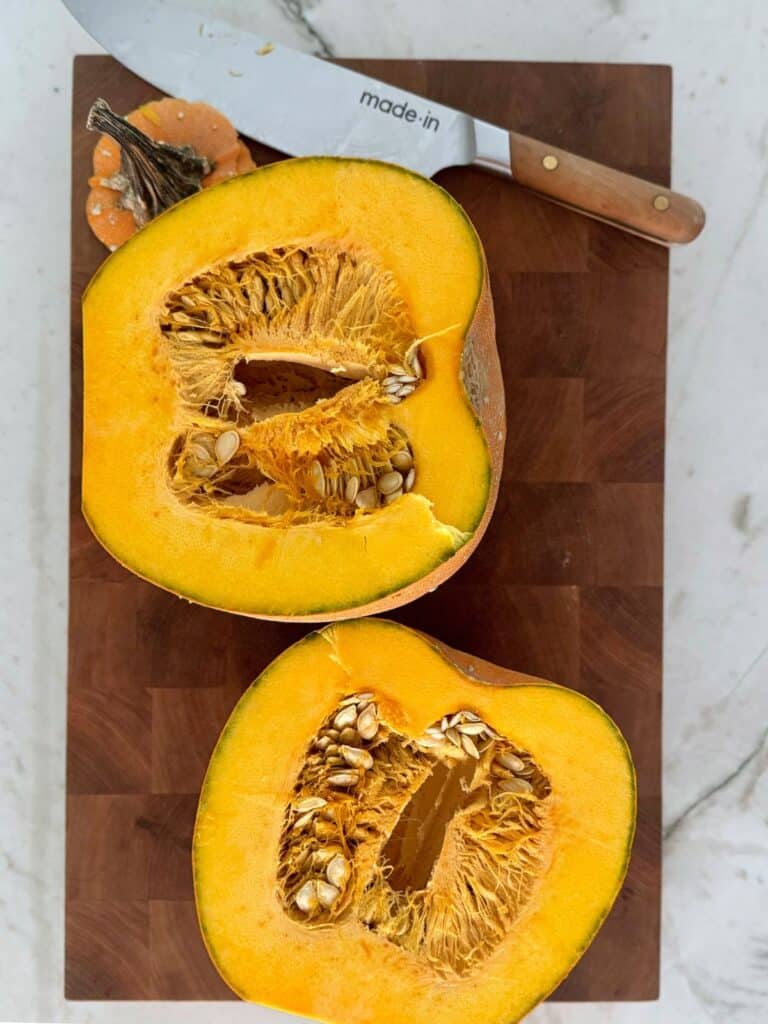
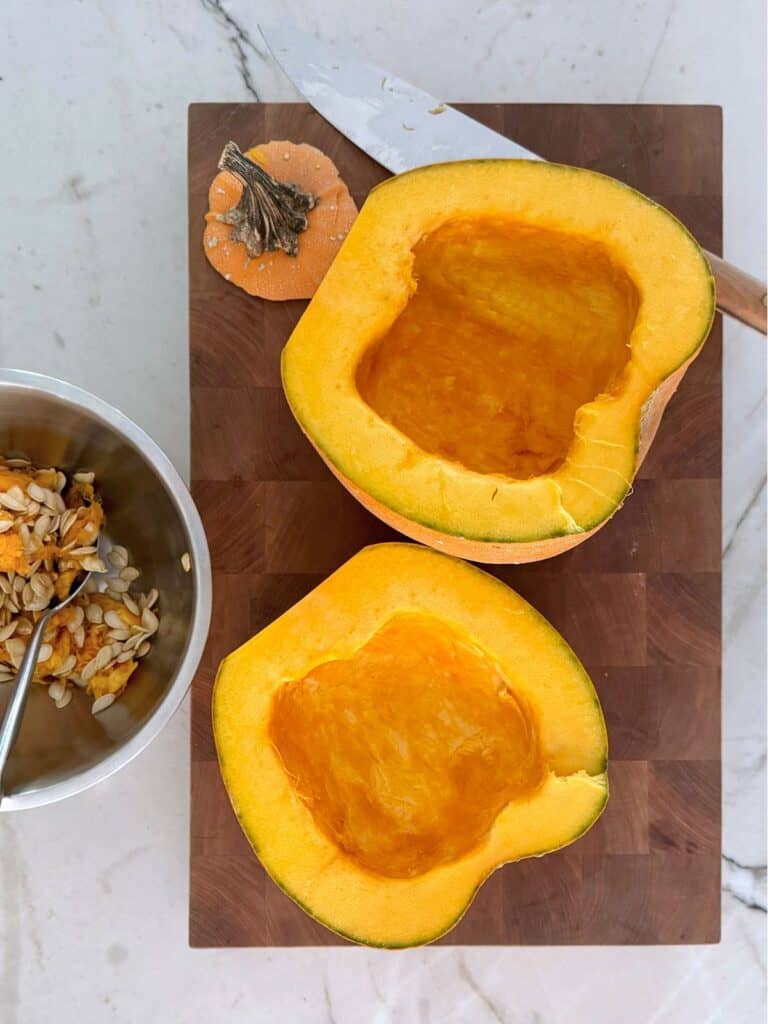
- Rub flesh sides with avocado oil and place cut side down on your baking sheet. This traps steam inside, making the flesh very tender and preventing them from drying out. Bake until a sharp knife inserted into the center slips in and out easily. The skin will become a little wrinkled and brown near the edges. Times will vary depending on the size of your pumpkin. A small sugar pumpkin will take 45 minutes to an hour, a large pumpkin could take as long as an hour and a half.
- Remove from oven and flip over, allowing to cool just until you’re able to comfortably handle them. Then start scooping the flesh out, into a bowl or directly into your food processor or high speed blender. Depending on the size of your pumpkin, you may need to blend in batches. Just whirl until completely smooth and velvety.
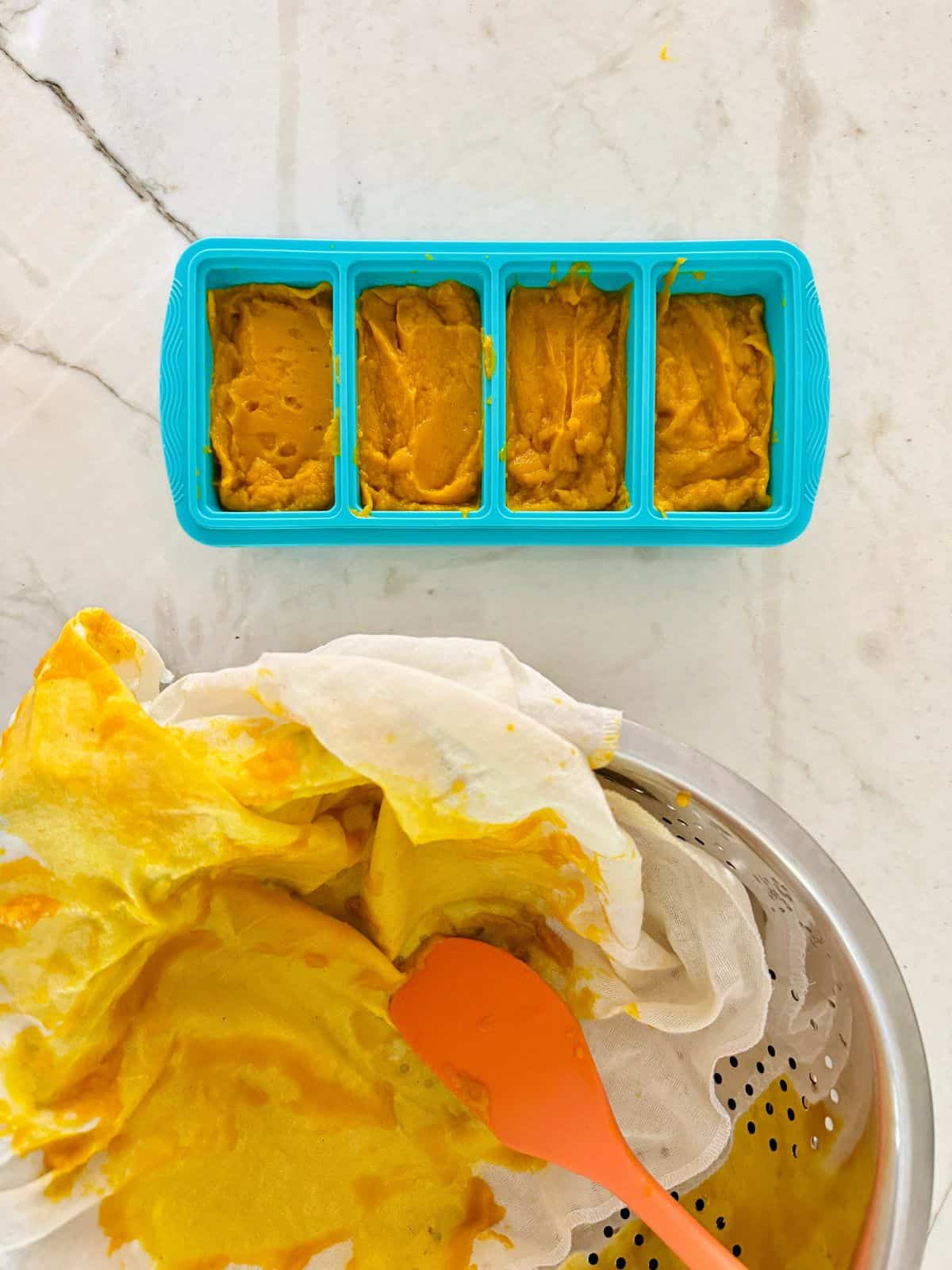
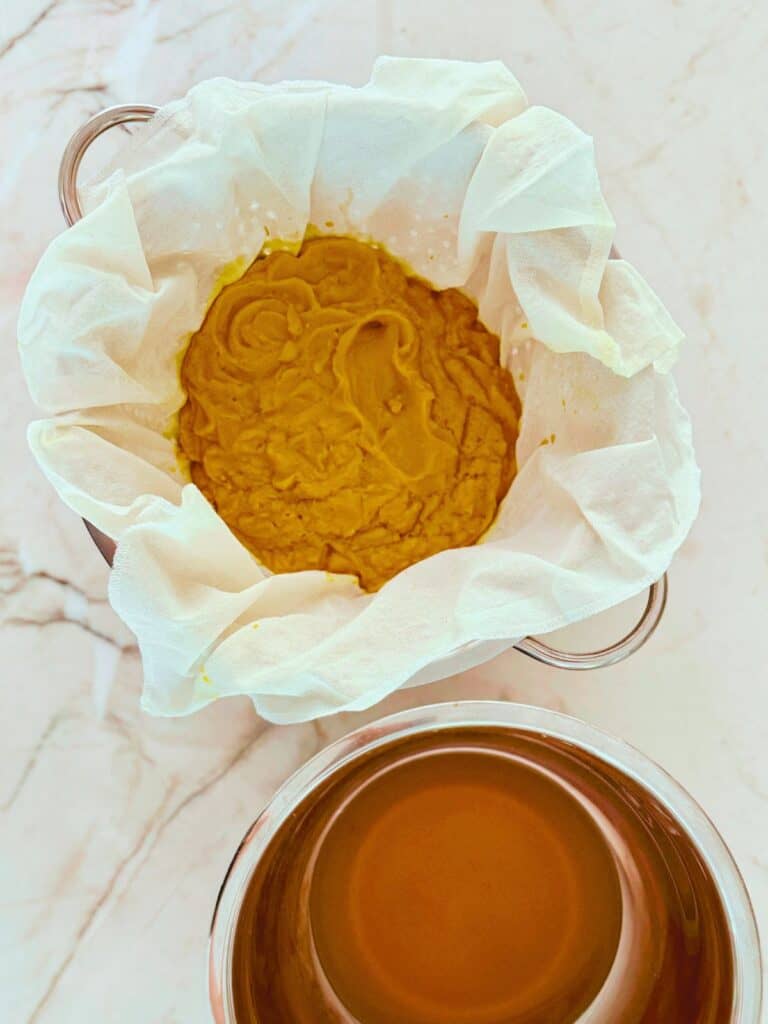
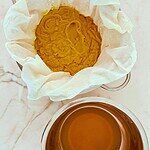
- Strain. This step is VERY important! Fresh pumpkin contains a lot of water, so you need to give it time to strain before using it in a recipe. You can use a colander lined with a cheesecloth placed inside a bowl, or a yogurt strainer like this one. Cover with plastic wrap and refrigerate at least an hour (minimum) and up to three days depending on how thick you want the final puree. I usually go at least overnight, but a couple days is even better.
All that’s left to do is portion and freeze (I love these silicone freezer trays) – or get cooking!
Pumpkin Puree FAQ
- Is there a difference between canned pumpkin puree and home made? There can be a difference in the consistency, with canned being thicker. Some of this depends on how long you strain your homemade puree. But I’ve also noticed quite a difference between brands, as well.
- Is straining really necessary? If you’re using it in soup, no. But for everything else I say YES, straining is really important. Again, there is a lot of liquid in freshly roasted pumpkin, if you try to use it without straining your recipe will be affected.
- How do I store pumpkin puree? Refrigerated, it should be good for 5 days (this includes straining time). Frozen, 6 months is recommended. But I’ve thawed puree out a year later and it’s been fine.
- Do I need special equipment? A food processor, good blender or a Vitamix is needed to blend the puree. A colander lined with cheesecloth over a large bowl, or a yogurt strainer are ideal for straining.
How Much Puree Does a Pumpkin Yield?

A good rule of thumb is 1 cup (8 ounces) of puree per pound of uncooked pumpkin. After straining the volume will go down. To estimate how much strained puree you’ll end up with, measure the weight of the pumpkin and multiply by .75. It’s not exact, but it will give you a rough idea of how many cups you’ll end up with.
Pumpkin Beyond Pumpkin Spice
Most of us probably think about sweet things when we hear a food is pumpkin. Pumpkin latte, pumpkin bread, pumpkin pie. They all have their place. But, have you considered savory pumpkin dishes???
I adore pumpkin in not-sweet applications. Think pumpkin goat cheese hummus, pumpkin chili, pumpkin gnocchi and pumpkin chorizo soup. When I have pumpkin puree on hand I find myself slipping it into all kinds of things. This week I made chicken paprikash (my son’s favorite) but subbed pumpkin puree for half of the stock. It was SOOOOO creamy and flavorful and (though paprikash purists might object 😂) we thought it was better than the traditional version! Oh! And my daughter makes a cauliflower pumpkin gratin that’s really good, too!
Two Of My Favorite Pumpkin Recipes
I’ve posted two of my favorite pumpkin recipes this week, one savory and one sweet!
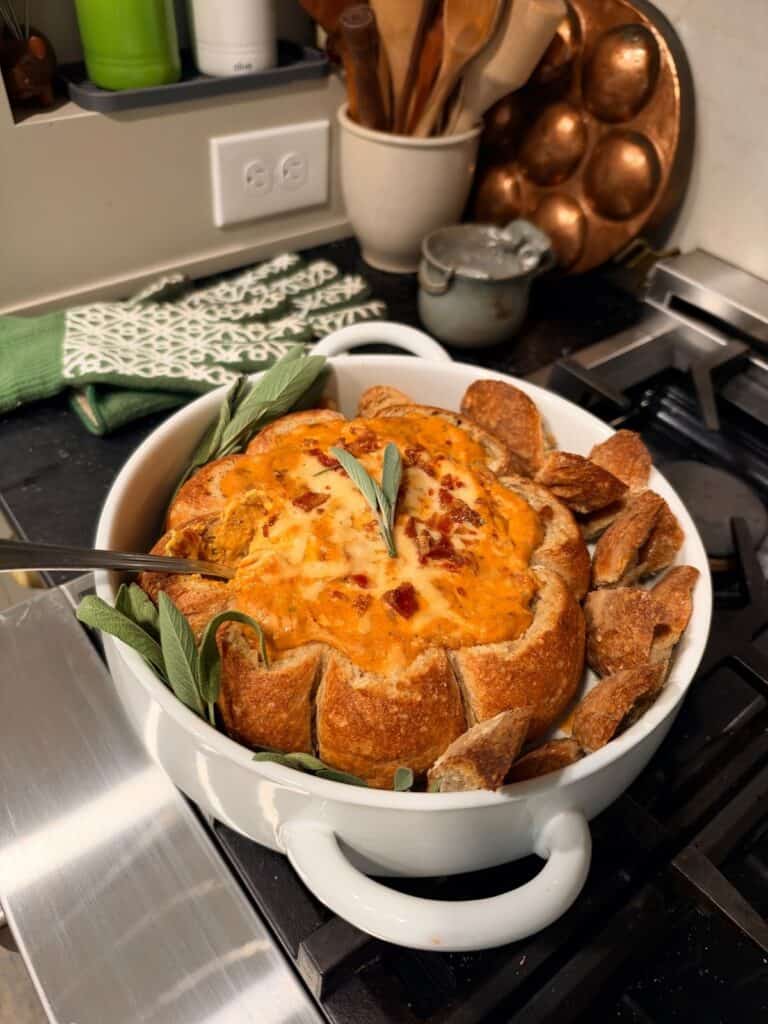
Let’s start with Baked Pumpkin and Gruyére Dip. It’s cheesy and warm, with mellow caramelized onions, roasted garlic, smoky bacon, nutty gruyere and creamy pumpkin. You can bake it in a bread-bowl or a casserole dish. Either way…it’s a crowd pleaser!
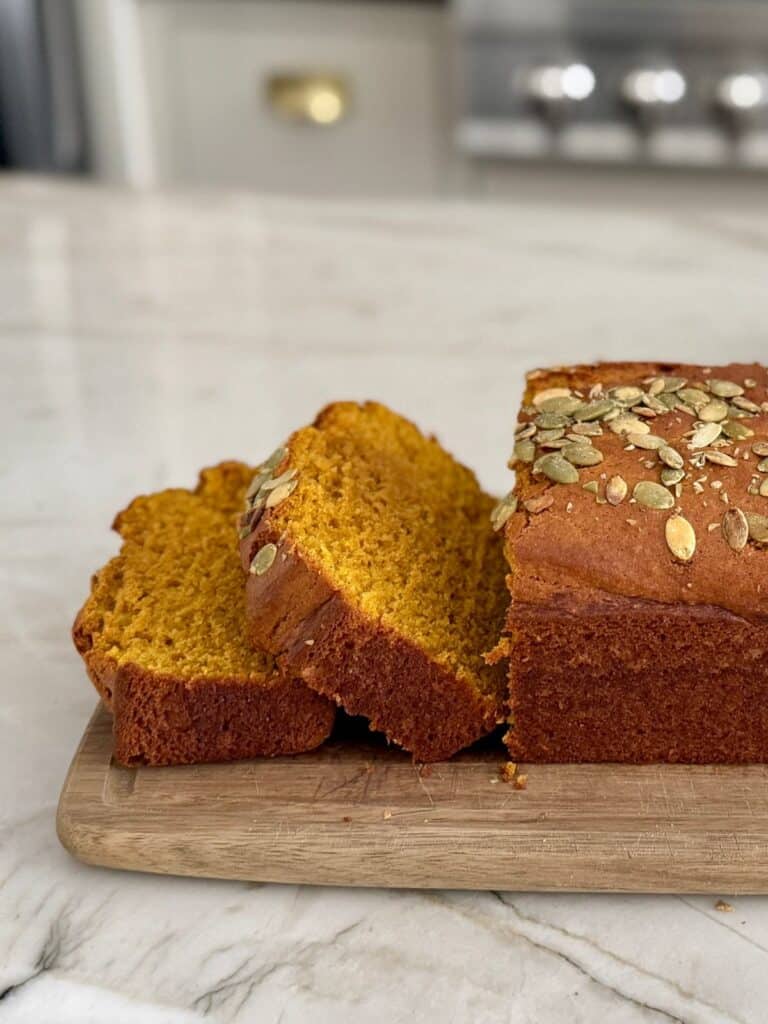
Next up, Pumpkin Bread. The recipe I made for years was really sweet. So I re-worked it with less sugar, and honestly? I like it better! It’s tender and perfectly spiced and goes great with a hot cup of tea on a cold afternoon!
I plan to add more pumpkin recipes as I create them, but in the meantime…what are YOUR favorite ways to use pumpkin? And do you love it sweet or savory or a little of both? Please share in the comments, I’d love to hear from you 🙂
Homemade Pumpkin Puree
Ingredients
- 1 fresh pumpkin (see post for varieties)
- avocado oil
Instructions
- Preheat your oven to 400°f, adjust rack to center and line a rimmed baking sheet with parchment paper.
- Clean off the outside of your pumpkin and cut in half from stem end to the bottom. Scoop out the seeds and stringy center.
- Rub flesh sides with avocado oil and place cut side down on your baking sheet. This traps steam inside, making the flesh very tender and preventing them from drying out. Bake until a sharp knife inserted into the center slips in and out easily. The skin will become a little wrinkled and brown near the edges. Times will vary depending on the size of your pumpkin. A small sugar pumpkin will take 45 minutes to an hour, a large pumpkin could take as long as an hour and a half.
- Remove from oven and flip over, allowing to cool just until you’re able to comfortably handle them. Then start scooping the flesh out, into a bowl or directly into your food processor or high speed blender. Depending on the size of your pumpkin, you may need to blend in batches. Just whirl until completely smooth and velvety.
- Strain. This step is VERY important! Fresh pumpkin contains a lot of water, so you need to give it time to strain before using it in a recipe. You can use a colander lined with a cheesecloth placed inside a bowl, or a yogurt strainer like this one. Cover with plastic wrap and refrigerate at least an hour (minimum) and up to three days depending on how thick you want the final puree. I usually go at least overnight, but a couple days is even better

Leave a Reply